Bitget Wallet and Bitget Exchange are not the same account or asset balance. Bitget Exchange is a centralized trading service with exchange custody; Bitget Wallet is a self-custodial wallet for supported blockchain networks and onchain services. The distinction affects who controls signing, where a balance appears, which costs apply and how access can be recovered.
Published and fact-checked: October 16, 2026 (KST). Scope: the Bitget Exchange account and Bitget Wallet’s wallet functions. Embedded payment, card and third-party services can have separate terms. Features, access methods and regional availability may change. The product distinction is described in Bitget Wallet’s official comparison (September 23, 2026; checked October 16).
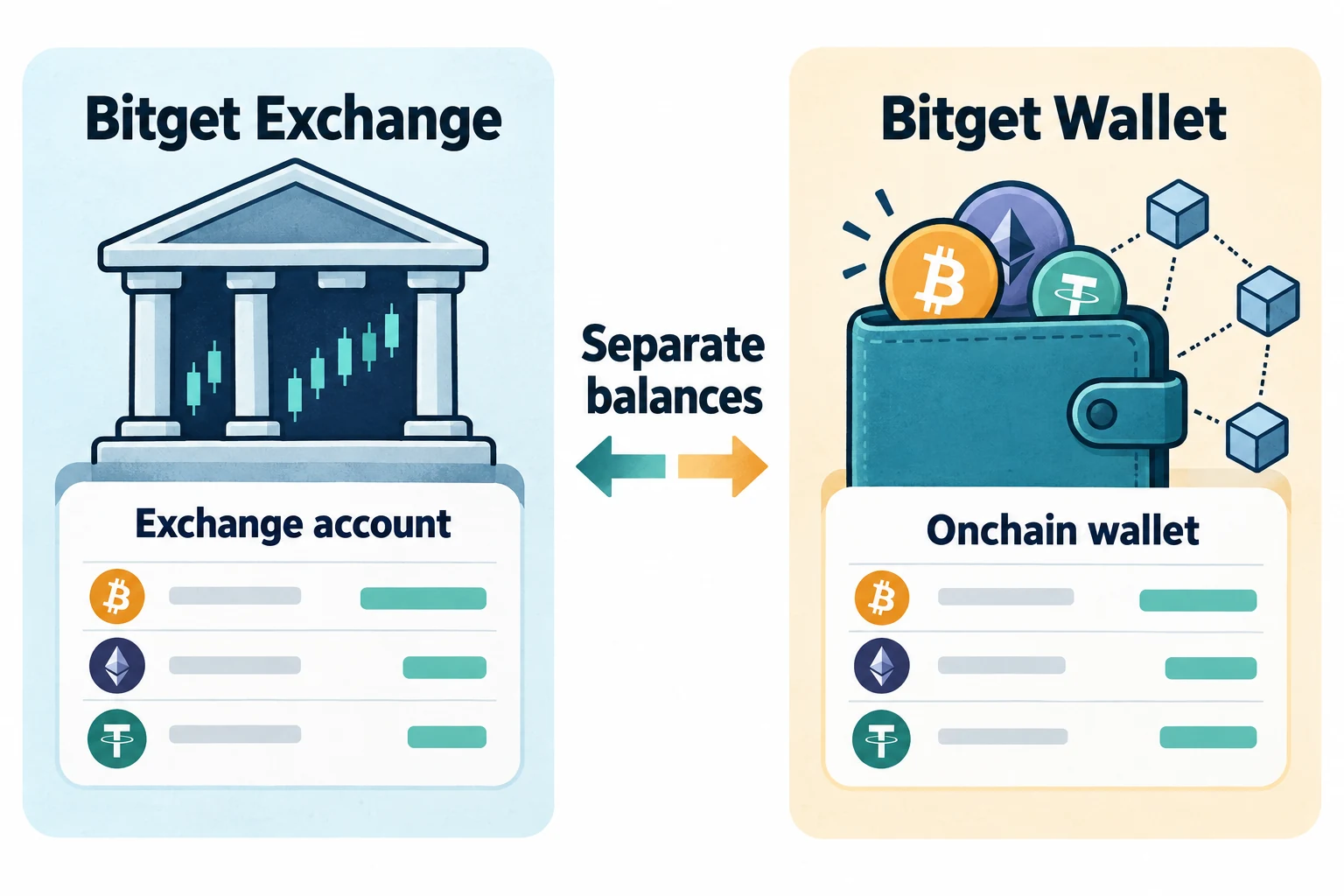
Bitget Wallet vs Bitget Exchange: what changes?
| Question | Bitget Exchange | Bitget Wallet |
|---|---|---|
| What identifies my assets? | Your exchange account and its product balances. | The selected wallet address, network and asset. |
| Who controls signing? | The exchange manages custody keys. | Your wallet access method controls wallet signing. |
| Where is activity recorded? | Account orders, trades and transfer records. | Wallet activity and relevant blockchain records. |
| Which fees should I check? | Applicable trading and withdrawal charges. | Applicable gas, swap or other service costs. |
| How is access restored? | Official exchange account recovery. | The method for that wallet type: backup or linked social login. |
Do not use the app name alone to decide where funds are held. Check the actual service, account or wallet address, network and transaction record. The table is an editorial decision aid, not a claim that every feature uses identical custody or eligibility rules.
Does the same email mean the same account or balance?
No. Using an email address for an exchange login and a wallet social login does not make their balances interchangeable. A wallet address is not an exchange user ID. Opening another product, creating another wallet or selecting another address does not itself move existing assets.
For example, an exchange trade changes the exchange account record; it is not automatically a transfer to your self-custodial wallet. Likewise, finding tokens at a wallet address does not prove that an exchange deposit has been credited. A deposit address supplied by an exchange is part of its deposit process, not a personal wallet seed phrase you can export. See the official explanation of custodial keys and internal account ledgers (March 11, 2026; checked October 16).
Custody: who can sign a transaction?
With exchange custody, the user requests a withdrawal and the platform controls the keys that authorize the onchain transaction. With self-custody, wallet access and signing credentials control the transaction. An exchange password is therefore not a replacement for a wallet backup. This distinction is about authority, not a guarantee that either model prevents theft or loss.
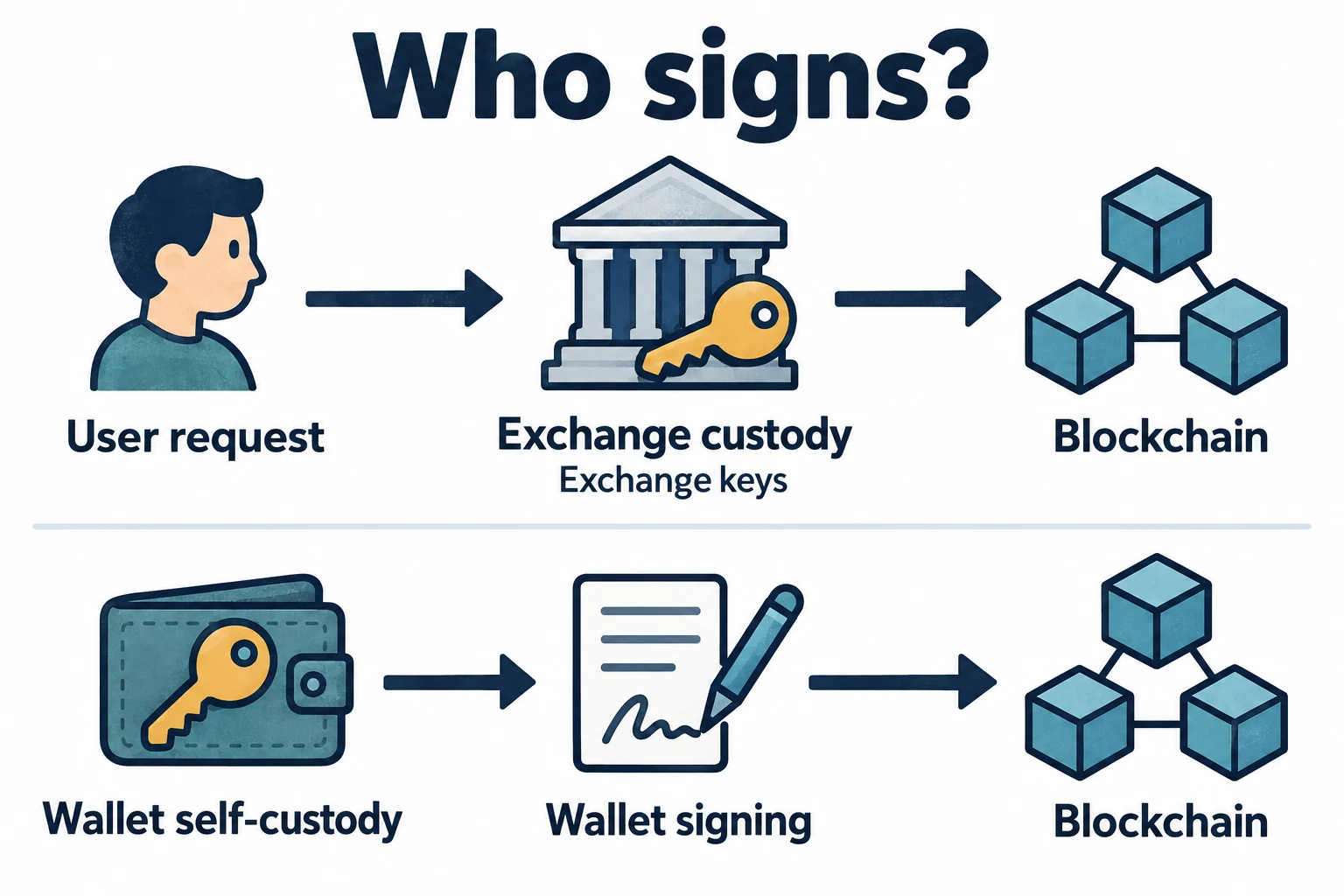
A crypto wallet is an interface for accounts and assets recorded on a blockchain; the software is not a container that physically stores coins. This helps explain why reinstalling an app, switching a network or losing an access method are different problems. Ethereum.org’s wallet explanation provides the underlying account-versus-wallet distinction (checked October 16, 2026).
Why is my balance missing in one of the apps?
A zero display is a reason to investigate, not proof of a failed transfer or lost assets. Work through these checks before making another transfer:
- Product: are you viewing the exchange account or the self-custodial wallet?
- Identity: confirm the intended exchange account or selected wallet address. A newly created wallet is not the old wallet.
- Network: match the blockchain in the sender’s record to the receiver’s supported network. The same token symbol can exist on different networks.
- Token: confirm the correct asset and, where applicable, its contract address and display setting. Do not add a token from an unsolicited message.
- Evidence: compare the withdrawal status, transaction hash, destination address and network record. For an exchange deposit, also check the exchange’s crediting requirements.
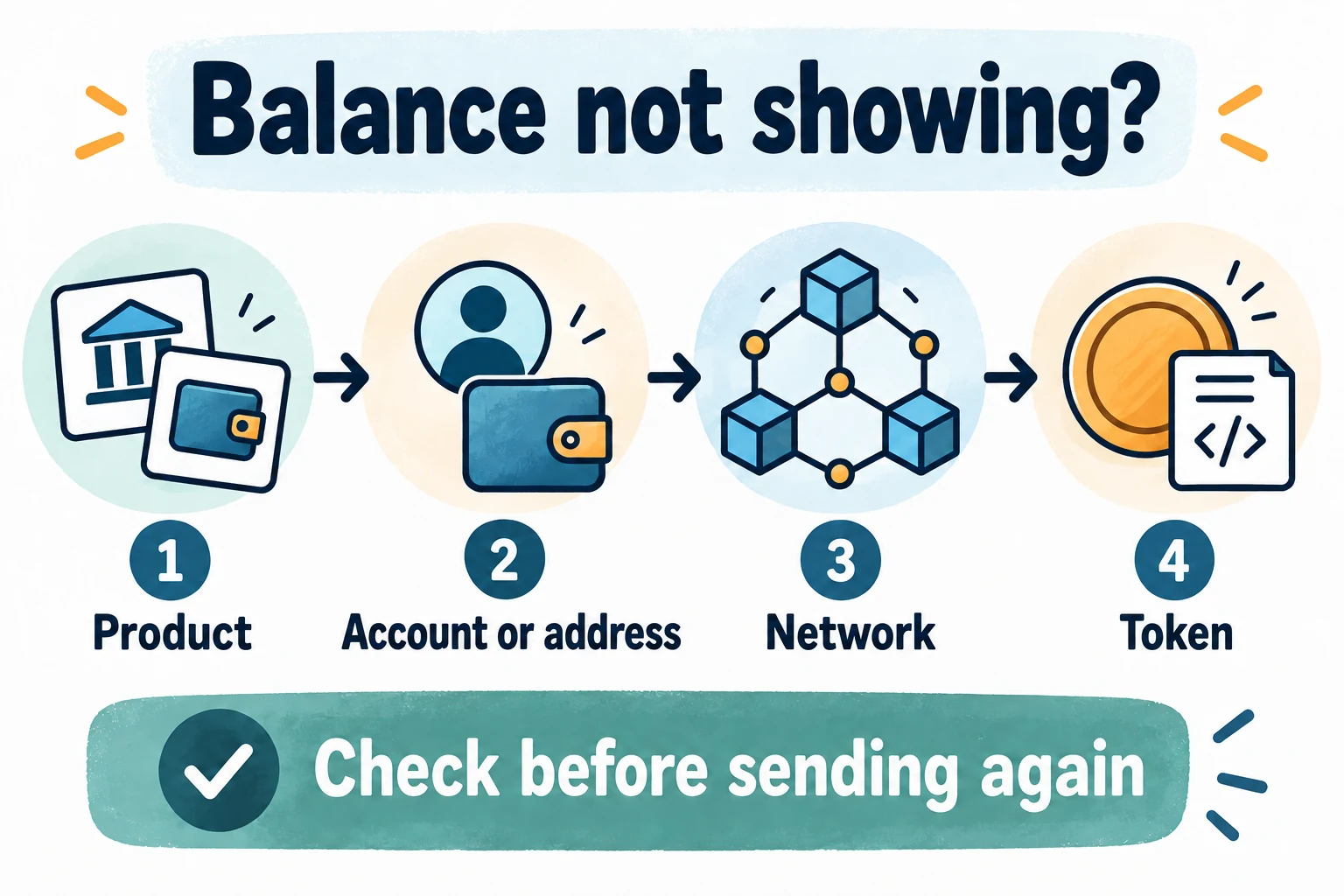
The token and network checks follow the official wallet receiving and asset-display guide (checked October 16, 2026). For exchange transfer status, confirmations and memo/tag checks, use BitQED’s existing Bitget deposit and withdrawal guide; this comparison does not repeat that transfer walkthrough. Do not assume an incorrect address or network can be recovered.
Fees: trading charges are not the same as wallet gas
Bitget Exchange trading charges depend on the relevant product and account rate. A withdrawal has its own asset- and network-specific quote. Neither is a universal price for using Bitget Wallet. Check the official Bitget Trading Fees FAQ (August 20, 2026; checked October 16) and the account’s current confirmation screen. BitQED’s exchange fee guide explains the separate maker/taker and product questions.
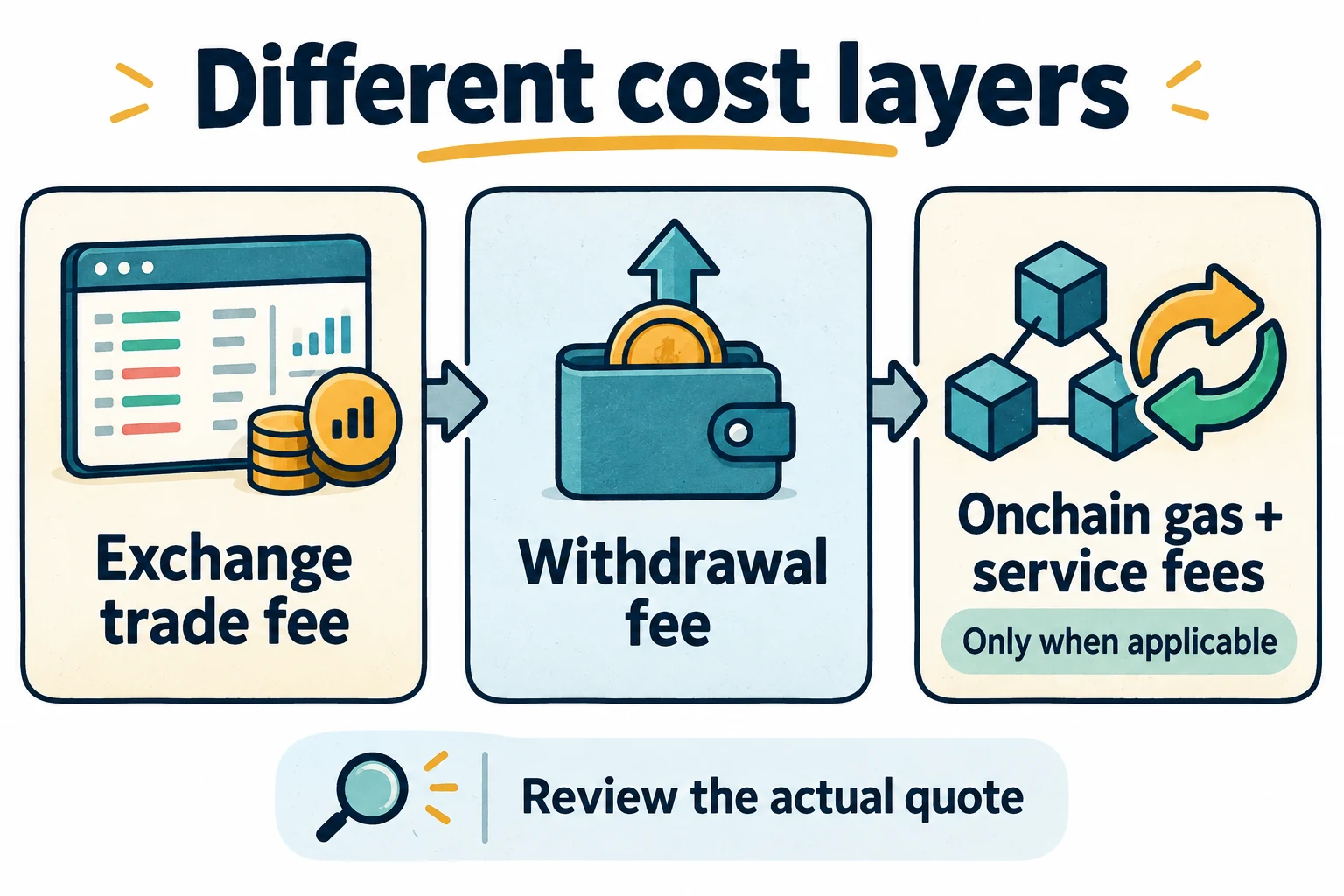
For an onchain action, distinguish the network charge from any swap or provider charge. Gas depends on the network and operation, not simply the token’s value. A token balance alone does not necessarily cover the required gas token; supported sponsored or alternative gas-payment arrangements have their own conditions. The official gas-fee explanation describes the underlying network cost (checked October 16, 2026). Its historical example prices are not current quotes.
For a swap, compare the asset and network sent, estimated asset received, gas, other quoted fees and slippage tolerance. Slippage is an execution-price risk, not another fixed trading-fee percentage. Cross-chain routes introduce additional route and completion considerations. These checks are supported by the official Bitget Wallet swap guide (checked October 16, 2026).
Editorial cost example: if the intended action is only an exchange withdrawal to a compatible wallet address, inspect the withdrawal quote and the recipient amount. A later swap is a separate action with a separate quote. Do not add a hypothetical swap fee to a transfer that does not include a swap, or count the same network cost twice just because it appears in more than one description.
Recovery: exchange login, seed phrase or social login?
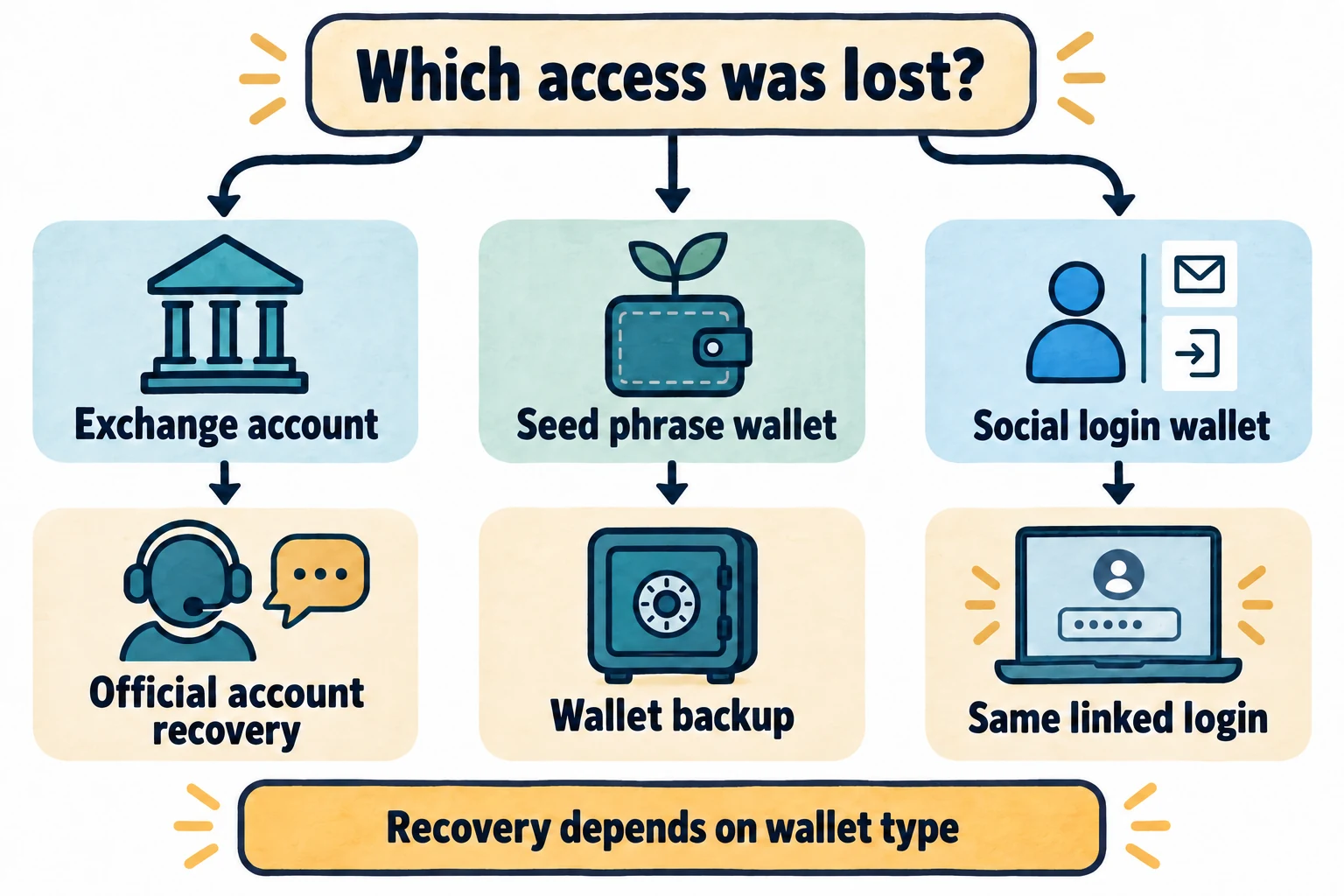
- Exchange account: lost email, phone or authenticator access belongs to the official account-recovery process. Review and temporary restrictions may apply; recovery is not guaranteed. Use Bitget’s account-recovery guide (April 3, 2025; checked October 16, 2026), not a person offering recovery in a direct message.
- Seed-phrase/private-key wallet: access depends on the correct wallet backup and any applicable additional credentials. An exchange password or KYC approval does not reconstruct a missing wallet secret. Do not erase the only working device or backup while investigating.
- Social-login wallet: do not automatically apply seed-phrase instructions. Bitget Wallet’s current help page describes access with the same linked email, Google or Apple account on another device. Confirm the original method and wallet address, including whether the wallet was later converted to a seed-phrase wallet.
The wallet-type exceptions come from the official social-login versus seed-phrase help page (checked October 16, 2026). Social login is an access method, not proof that exchange balances are linked or that every loss can be reversed. Never disclose a seed phrase, private key, password or one-time code to a supposed support agent.
Which risk and support route applies?
For exchange account restrictions, deposits not credited or account verification, start with the exchange’s official support. For wallet display, the selected address, signatures or wallet-type access, use the wallet’s official help. For a third-party dApp, also identify the actual protocol or service involved; appearing inside a wallet does not make every service the wallet provider’s own product.
Self-custody shifts responsibilities; it does not remove malware, phishing, malicious approval, smart-contract, bridge or market risk. Before signing, check the site, network, recipient and permission requested. A security alert or audit is not a guarantee of recovery. Bitget Wallet’s asset-security guidance covers backup and approval risks (checked October 16, 2026). For exchange login protection, see the existing Bitget account security guide.
Verify support through the product’s official site or app rather than search advertisements or unsolicited messages. Bitget’s phishing guidance explains impersonation and credential theft (checked October 16, 2026). A demand to reveal secrets or pay an individual to unlock funds is not proof of an official recovery process.
Before deciding which product you need
Identify the actual task first: exchange account trading, holding an asset at a self-custodial address, an onchain transfer, or interaction with a specific service. Then check custody, supported assets/networks, the complete quote, backup method and official eligibility rules. A wallet’s availability does not establish permission to use exchange products, cards, payment providers or dApps in your country. Do not bypass regional restrictions or identity requirements. For exchange eligibility, consult the current Bitget Terms of Use.
Sources, method and disclosure
Official documentation is linked next to the relevant claims and was checked on October 16, 2026. Product descriptions are the providers’ descriptions; the comparison, diagnostic sequence and cost example are BitQED’s explanations. The five original AI-assisted illustrations are conceptual, not screenshots, account tests or evidence of a security incident. No reader account was accessed and no transfer or recovery request was performed for this article.
BitQED is an independent informational site and a Bitget affiliate partner, not Bitget Exchange or Bitget Wallet. This article contains no referral link or registration CTA. It is general information, not investment, legal or tax advice. Crypto assets involve market, custody, operational and regulatory risks. Neither custody model guarantees safety, compensation or recoverability; check current terms and account-specific warnings before acting.